
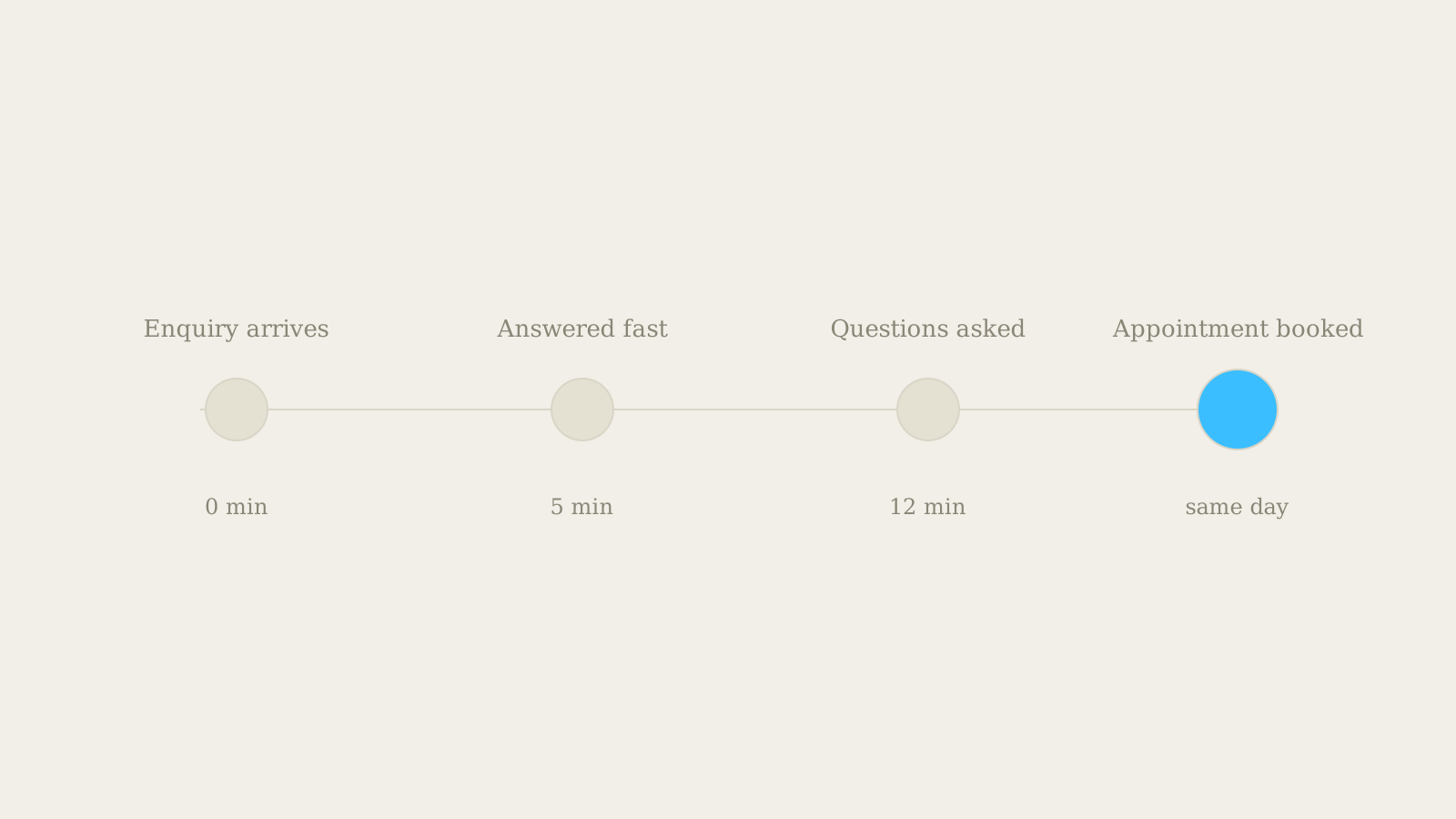
AI appointment setting uses a chat assistant to get someone to the right appointment. It can explain approved service details, collect what you need and help pick a time. A real booking needs more: the right appointment type, availability actually checked, and a record that lands in the diary. Writing “you’re booked” is not booking. So it needs clear limits, a plan for when no slot fits, and a person to take over when it cannot finish the job safely.
Say what is being booked
An appointment might be an intro call, a paid job, an assessment or a survey before a quote. Those are different commitments. Tell the customer which one, how long, what it costs and what it does not cover.
The assistant can only explain what you have approved. Confirm the service descriptions, the areas covered and the questions needed before booking. Anything unusual should go to a person, even if the customer wants a standard slot.
It must never invent a price, promise a result, or turn an assessment into accepting the job. If someone has to check suitability first, call it an appointment request until they have.
Talking and scheduling are two different jobs
A calendar link can show which times are taken. Google Calendar, for example, documents a free/busy query. That tells you nothing about travel time, who is qualified, or whether an appointment was created. Google Calendar’s free/busy documentation.
So the booking process needs rules for duration, gaps between jobs, working hours, notice and any kit involved. If the work means travel, say how that is handled. A fixed buffer and route-aware scheduling are not the same thing.
Slots vanish between being offered and being picked. The system has to re-check, then report whether the booking worked. If it cannot tell, it should say so and hand over — not promise.
Example: a booking conversation
An illustrative workflow for a fictional accountancy firm, assuming a tested booking connection and approved information. Not a demonstration of Job Growth Lab’s current integrations.
“I’m the firm’s automated assistant. I can request an introductory bookkeeping call or pass a question to the team. Is this for an existing business?”
“Yes, a small shop. I want to discuss monthly bookkeeping.”
“The introductory call is 20 minutes, to talk through the service. The diary shows Tuesday 22 September at 10am or Thursday 24 September at 2pm, UK time. Does either work?”
“Thursday at 2pm, please.”
“Your call is confirmed for Thursday 24 September 2026 at 2pm UK time. The confirmation explains how to join and how to change it.”
It says it is automated. It names the appointment and the time zone. The last message only happens because the booking went through. A real setup also confirms contact details the agreed way.
Plan for no slots and hard questions
If nothing suits, offer something real: look further ahead, note their preference for the team, or give them a contact. Only offer a waiting list if someone keeps one. Never imply a slot is being held when it is not.
If they ask something outside approved information, say so and pass it on. “The team will need to confirm that” is a good answer. A plausible guess becomes a promise you never made.
If the connection fails, leave the appointment unconfirmed and tell the customer what happens next. Give the team enough to finish it without making the customer start again. Someone owns the queue of half-finished bookings.
Keep the real diary right
Jobs booked by phone or at the door have to reach the diary the system reads. Otherwise a “free” slot is already gone. Same for staff changes, longer jobs and closures.
Job Growth Lab offers AI appointment setting. The channels, calendar integrations, buffers and cancellation behaviour get confirmed in your scope. The examples here explain the shape of the work, not a promise of every feature. Your team supplies the knowledge, keeps capacity current and handles exceptions.
A plain booking link is enough when customers know what they want. A human coordinator suits complicated visits. AI earns its place when the conversation genuinely helps and its limits can be tested.
Test the whole thing, including failure
- Does the customer know what the appointment covers and what it costs?
- Are availability, duration and time zones right?
- Does confirmation go out only after the booking is recorded?
- What happens when the slot goes or the connection drops?
- Can a customer reach a person without starting again?
Count wrong bookings, manual fixes and abandoned requests alongside the total. That is what shows whether the assistant makes appointments anyone can actually use.