
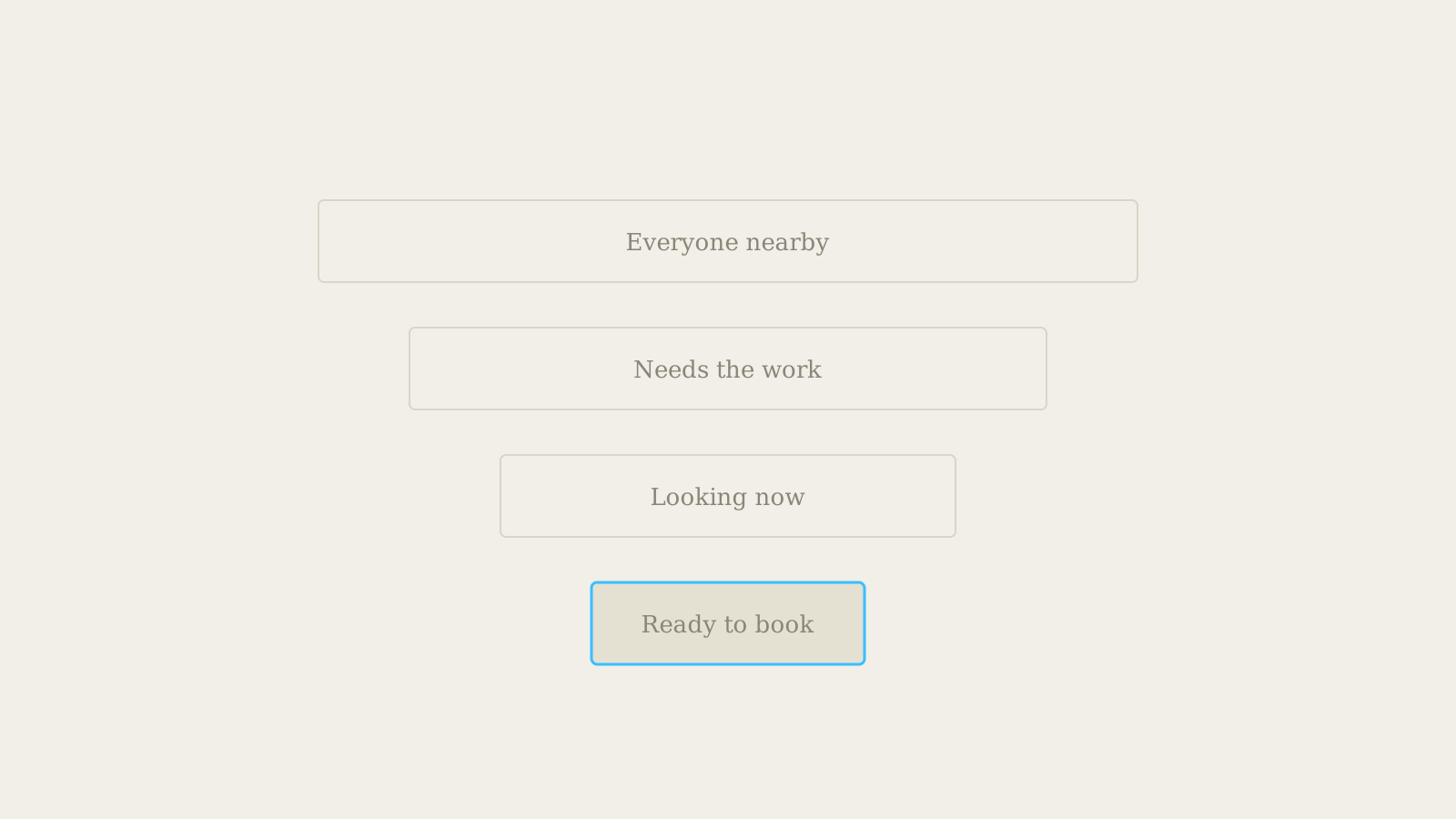
AI is good at reading everyday language, drafting replies and pulling details out of a conversation. Plain automation is good at predictable jobs, like sending a confirmation after a booking. People stay responsible for the service, the facts and any decision needing judgement. Ask which task actually needs help. Often a clear form or booking link is enough. AI earns its place when customers need a flexible back-and-forth first.
Automation follows a rule; AI reads an input
A rule does one thing when one event happens: appointment created, send the approved confirmation. It can drop in a name and a time. No AI needed.
A conversational AI writes a reply based on what someone typed. It can spot that “I need the gutters cleared before winter” is a service you offer, then ask for a postcode. That flexibility copes with odd wording. It can also misread it, or answer wrongly.
AI does not automatically know your prices, see your diary or have permission to book. That all depends on how it is connected and set up. Calling something an AI assistant tells you nothing about what it can do.
One enquiry, three ways to handle it
A fictional enquiry: “Do you clean gutters in Stirling, and could someone come next week?” Illustrative workflows, not a demo of a Job Growth Lab setup.
- Manual
- Someone reads it, asks for the postcode and property details, checks the diary and replies. They can handle anything odd. The customer waits until they are free.
- Rules-based
- An auto-reply confirms receipt and links to a short form asking for service, postcode and timing. A person checks it, or a standard booking route takes it.
- AI-assisted
- An assistant uses approved service info, asks for what is missing and summarises the request. With a tested booking link it may help pick a slot. Otherwise it hands over.
Manual is fine at low volume. Rules are fine when the questions repeat. AI needs a reason to justify the setup and the watching — usually varied enquiries that need clarifying.
Either way, “next week” is a wish until a real appointment exists. A confident reply is not proof the diary was checked. The customer should know what has actually happened.
Good tasks have clear edges
Start with routine facts: areas covered, opening hours, what a survey involves, how to reach the team. You approve the wording and name who keeps it current. Change the service, change the answers.
Gathering details saves repeated questions. The assistant can ask about service, location and timing, then write a short summary. Let it record doubt. “Customer is not sure which service they need” is a useful answer.
Booking is a separate job. The system has to know which appointment type fits, which slots are free and whether the booking went through. Some businesses should take a request and confirm by hand instead.
AI can also draft marketing copy and summarise recurring questions. A person still checks the facts, the permissions and whether it sounds like the business.
Where people must stay involved
AI can be confidently wrong. NIST’s Generative AI Profile calls this confabulation and stresses how people and systems work together. Check outputs and limit what the tool may decide. NIST’s 2024 Generative AI Profile (PDF).
Complaints, vague jobs, sensitive situations and anything outside your normal terms need a person. A real handover names who gets it, what they need to know and what the customer was told. Dropping it in an unwatched inbox is not a handover.
Tell customers when they are talking to a bot, and give them a way to reach a human. Never let a generated message sound like the owner has personally looked at the job.
Ask only for what the next step needs, and handle sensitive details carefully. The ICO’s data-minimisation guidance covers keeping personal data relevant and limited.
Use the smallest thing that works
If most people know what they want, look at a booking link. If you only need three details, use a short form. If enquiries are rare and need expertise, a prompt human reply wins.
Job Growth Lab offers AI appointment setting alongside other local marketing. The channels, calendar behaviour and escalation rules have to be agreed for each setup. You supply approved information, keep availability current and name who takes over.
Judge it on resolved enquiries, suitable bookings and clean handovers. Count the corrections and dead-end conversations too, not just time saved. Lots of automatic replies proves nothing.
Before adding AI
- Which part of the enquiry process is actually painful?
- Would a clearer page, form or booking link fix it?
- What may the assistant answer, and what must it pass on?
- Who reads the conversations and keeps the facts right?
- How will you know it got the customer to the right next step?