
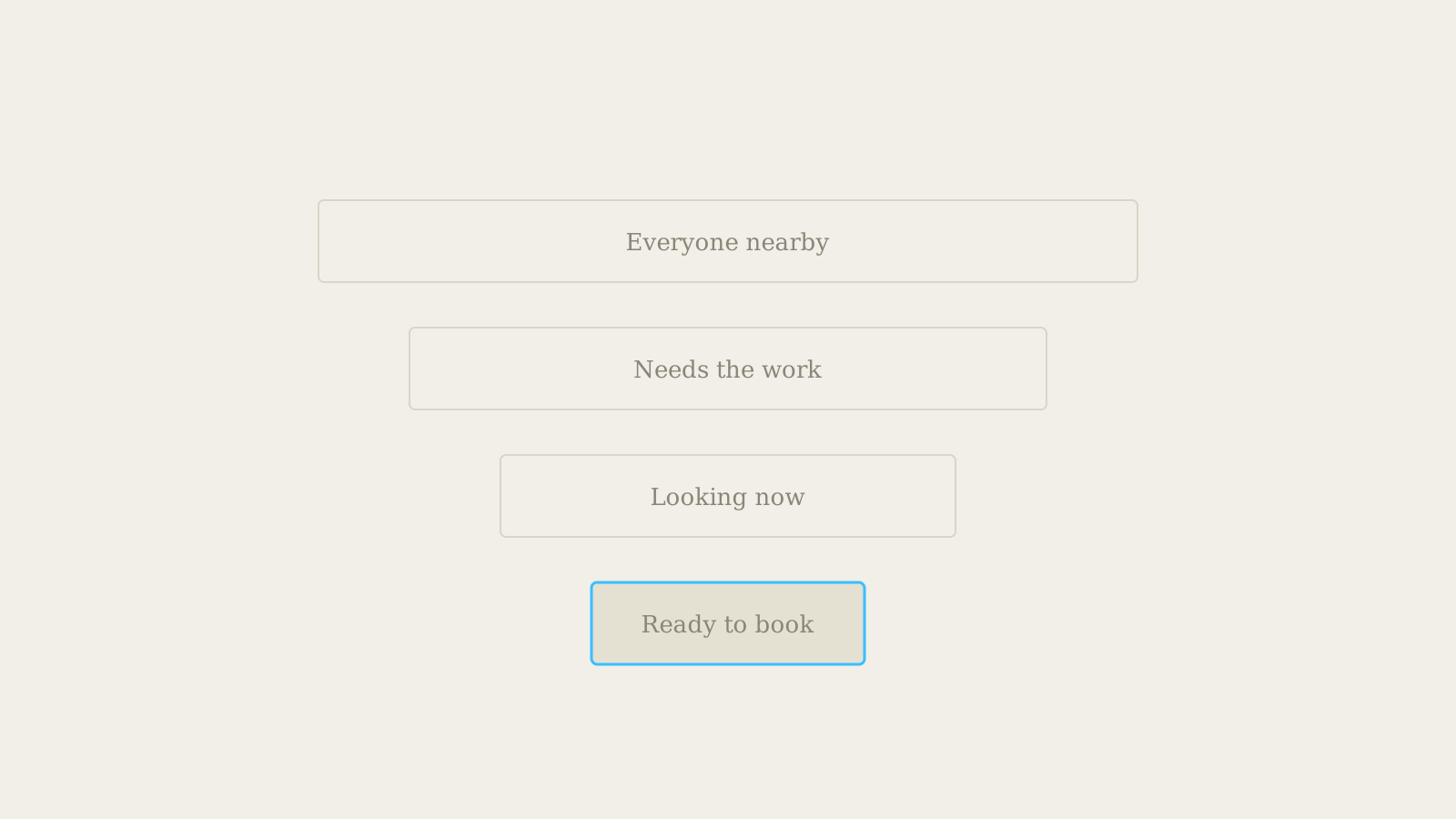
Customers pick a business by working out three things: can you do the job, can they trust you, and does it suit them practically. They use recommendations, search, reviews, websites and phone calls to decide. Some compare for days. Some need you today. There is no winning script. Make the important questions easy to answer, and let people choose how to carry on.
Being found is only the start
First they check you are relevant. A local address does not tell them you do the job. A vague heading like “property services” means little to someone with one broken gutter.
Then the questions get sharper. Have you done this before? What is included? What might it cost? When can you come? Who turns up? Which matters most depends on the job and the person.
Urgency shifts the weight. Someone with a leak cares about today. Someone planning a kitchen does not. Urgency does not remove worries about trust or price — it just squeezes them.
What UK research actually shows
Ofcom asked YouGov to run 24 online interviews with UK internet users aged 17 and over, between 17 June and 3 July 2025. Mixed ages, regions and confidence levels. It was qualitative: it explored how people felt, not what percentage do what.
People used different tools for different jobs, and double-checked AI answers when accuracy mattered. The study looked at search in general — health, money, news — not at hiring a local trade. Read the report and method, published 26 September 2025 (PDF).
So the lesson is modest: give people facts they can check, and expect some to look in more than one place. It does not tell you how many of your customers use AI, read reviews or visit your site. Ask them.
Make fit and price easier to judge
Proof works when it answers the worry they actually have. A detailed example of a similar job shows experience. A relevant qualification backs a claim. Reviews show what dealing with you felt like. None of it guarantees the next job.
Be straight about price. Fixed fee? Say what it covers. Need to visit first? Say why, what happens and whether it costs anything. A “from £X” with no conditions creates more doubt than it removes.
Convenience means different things: a short drive, an evening slot, a short form, or a real person on the phone. A booking link suits someone who knows what they want. It is no help to someone who needs advice first.
Example: comparing three groomers
A fictional example. Someone needs a groomer for a nervous older dog. A recommendation and a search turn up three. All groom dogs. Their information answers different questions.
The first lists prices but says nothing about the appointment. The customer cannot tell whether to flag the dog’s nerves. The second explains a first chat, how it decides on appointment length, and what to tell them. The third looks fine but has no times that work this week.
They ring the second. That does not make it the best groomer, or the others bad at marketing. Its process happened to match this customer’s worry. Someone else would prefer the first one’s easy repeat booking.
On the call the groomer may decide a normal appointment will not suit. Helping someone judge fit includes saying so. A booking should follow a clear decision, not paper over a question.
Your reply is evidence too
An enquiry gives them a live sample of your business. A good reply answers the question, asks only what you need next, and says what happens now. If you have to check the diary or ask a colleague, say that — it beats a vague “we’ll be in touch”.
An automatic acknowledgement confirms you got the message. It cannot answer an unusual question or prove a human has read it. When you review your process, keep three things apart: received, answered, booked.
People also differ in how they want to talk. A text suits someone who cannot take calls. Someone else needs to explain the problem out loud. Offer real options, including a person, and say when each is watched.
Learn, but do not invent a typical customer
Ask recent customers what they needed to know and what nearly put them off. Ask the team which questions come up again and again. Note why good enquiries stalled. Treat a handful of answers as clues, not a survey.
Job Growth Lab covers both being found and the conversation after. What you know about real customer questions is the part nobody else has. A provider can sharpen the explanations; only you can confirm what you deliver.
See your business as a customer does
- Is your service and area clear before anyone calls?
- Does your proof relate to the job they are weighing up?
- Can they see the price, or how to get one?
- Does your first reply move things forward?
- Can someone who needs to talk reach a person?