
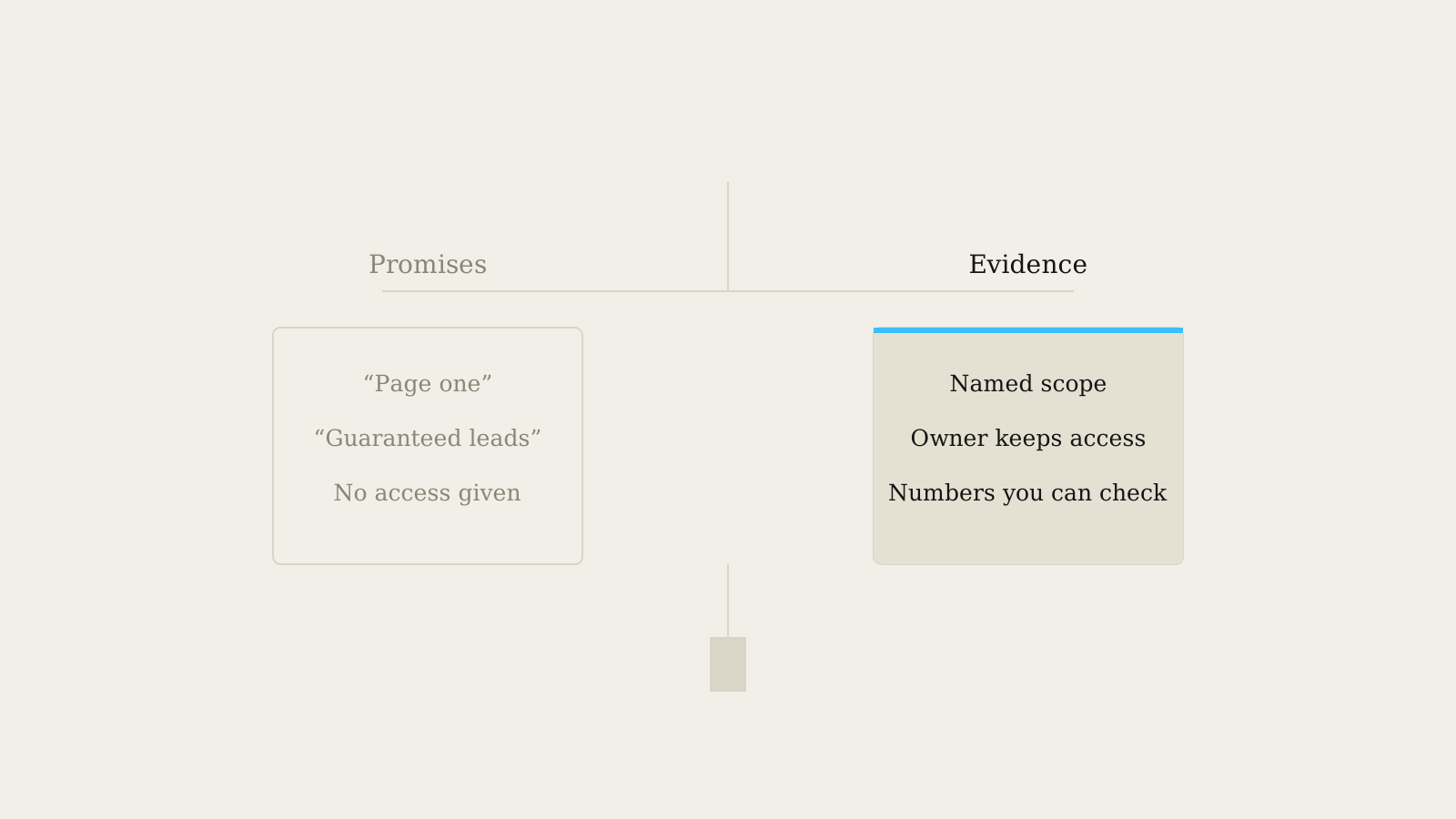
Choosing a marketing provider is difficult because you are buying something you cannot inspect, from people whose main skill is being persuasive. Referrals help. So does knowing which questions produce a straight answer and which produce a change of subject. Nothing below requires you to understand advertising — it requires you to notice how someone responds.
What a good first conversation sounds like
The first meeting should be mostly them asking and you talking. What work do you want more of? What do you not want? How many jobs a week can you actually take? Who answers the phone when you are up a ladder? What has gone wrong before?
A provider who presents a package before understanding your capacity is selling a product, not solving your problem. Booking a business into work it cannot deliver is a way of losing a client in four months.
Equally, be wary of a conversation that stays entirely at the level of ambition. “Growth” and “scaling” are not a plan. By the end you should know what they would do first, roughly what it costs and what they need from you.
Promises that should end the meeting
“We’ll get you to page one.” Nobody controls search rankings. Google says so itself in its SEO Starter Guide, and warns against anyone guaranteeing placement.
“Guaranteed leads.” Guaranteed by what? Usually by a definition of “lead” loose enough that a wrong number counts.
“Results in 30 days or your money back.” Campaigns need enough time to gather enough data to judge. A thirty-day guarantee usually means thirty days of aggressive spending to hit a number, then a quiet renewal.
“We have a secret method.” The platforms publish their documentation. There is craft in this work, but no hidden lever.
“Don’t worry about the technical side.” Said kindly, it means they will handle it. Said instead of an answer, it means you will not be given access to your own accounts.
Checks you can do yourself
Look at their own presence. Not the design — the substance. Do they explain how anything works, or only assert that they are experts? Is anything on their site actually useful to you before you pay?
Ask for a client in your trade, and phone them. Not a written testimonial. A phone call, where you can ask what went wrong as well as what went right.
Ask what happened to a campaign that failed. Everyone has one. A provider who cannot describe a failure and what they changed has either not been doing this long or is not being straight with you.
Check who you will actually deal with. The person selling is often not the person doing. Ask who runs your account day to day, and whether you can speak to them before signing.
Example: two providers, one question
An illustrative scenario. An electrician asks two providers the same question: “If this is not working in three months, how will I know?”
The first says the campaign will be working, that their clients see results quickly, and moves on to a case study about a different trade in a different city.
The second says: you will know because we agreed at the start that you need roughly six suitable enquiries a week to fill your diary, we will show you the enquiry count, how many were the work you want and how many became appointments, and we will look at those three numbers together every month. If enquiries are there but appointments are not, the problem is in the follow-up. If enquiries are not there, the problem is upstream and here is what we would try next.
Both answers took about the same time to give. Only one of them is checkable in three months, and that is the whole difference.
Terms worth reading before you sign
Term and notice. How long are you committed, and how much notice do you give? A minimum period is reasonable — campaigns need a run to be judged. A twelve-month lock with no break is not reasonable for a first engagement.
Ownership and access. Whose ad account is it? Whose website? Who holds the Google Business Profile? If they built a landing page, do you get it? See who owns your marketing assets — this is the clause that hurts most when it is wrong.
Your data. Enquiries from your customers are personal data, and under UK law you are responsible for them. The contract should say what the provider may do with that data, that they act on your instructions, and that you get it back in a usable form at the end. The Information Commissioner’s Office explains controller and processor duties at ico.org.uk.
What happens at the end. An exit that hands over accounts, data and assets within an agreed period. Without that clause, leaving costs you the thing you were paying to build.
A short list to take into the meeting
Take this with you and write the answers down. Comparing written answers a week later is a different exercise from remembering who was most likeable.
- Did they ask about your capacity before proposing anything?
- Can they say what they would do first, and why that first?
- Did they guarantee any ranking, lead volume or timescale? (If yes, stop.)
- Who runs the account day to day, and have you spoken to them?
- What are the three numbers you will review together every month?
- Who owns the ad account, website, listing and enquiry data — during and after?
- What is the minimum term, the notice period and the handover at the end?
- Can you call an existing client in a similar trade?
A provider worth having will find none of this offensive. Being asked good questions is a relief to anyone who can answer them.